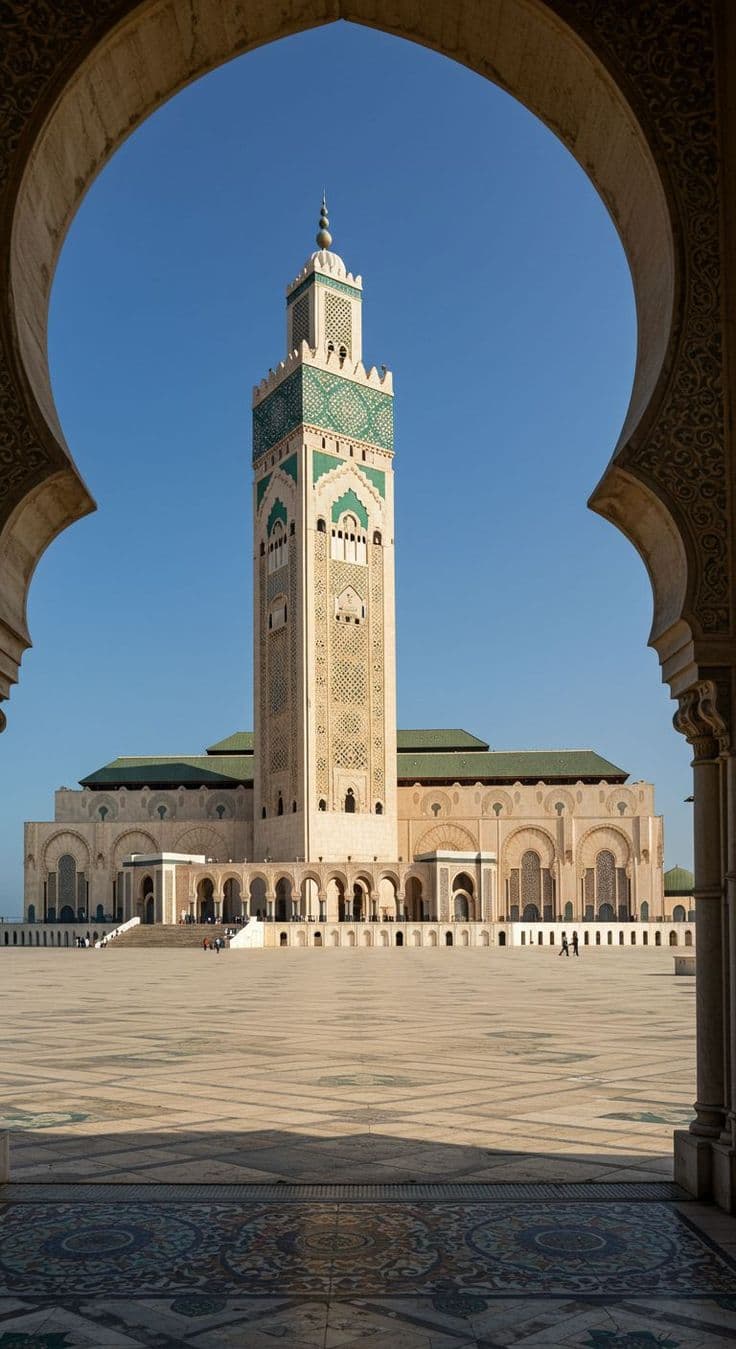
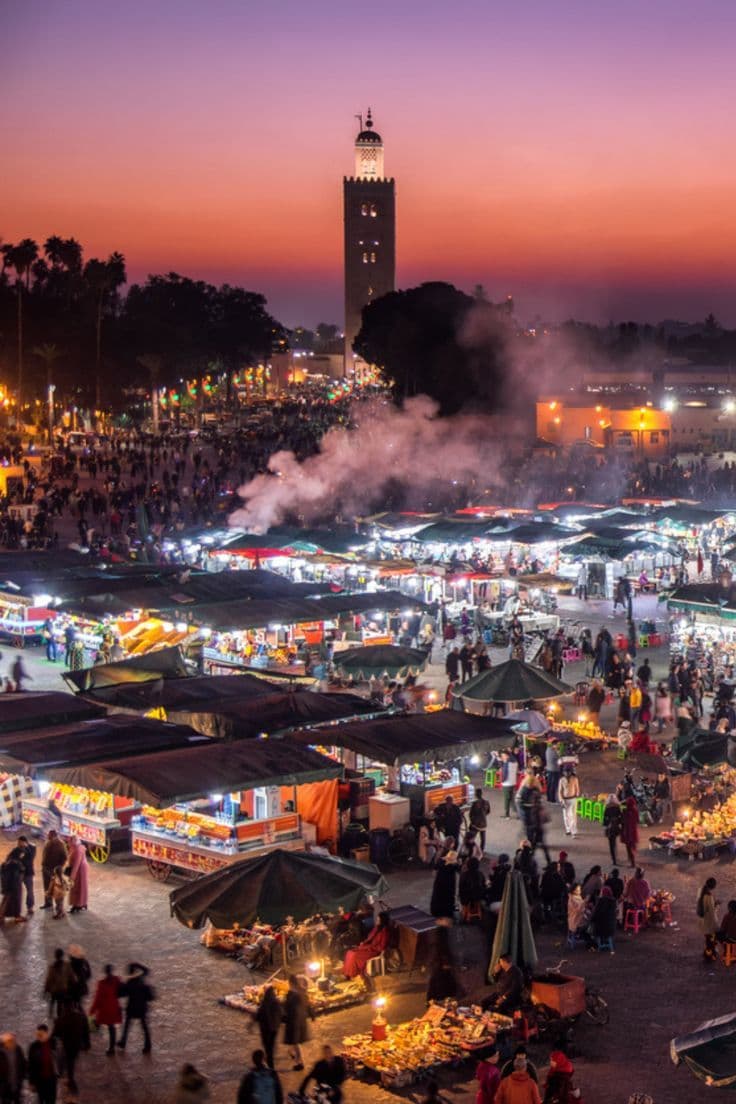
The old city walls glow ochre at sunset, and the medina inside them hasn't really changed in a thousand years. Spice pyramids, brass lanterns, leather slippers, and the smoke of a hundred food vendors — Marrakech is loud, warm, and unforgettable.
By day: the geometry of Ben Youssef, the calm of the Bahia Palace, the secret gardens of Le Jardin Secret. By night: Jemaa el-Fnaa, the world's most theatrical public square — storytellers, snake charmers, musicians, and grilled fish for a handful of dirham.
“Marrakech doesn't open to the rushed. Give it slow mornings and it gives you everything.”
Souk shoppingPalacesRooftop sunsets
Marrakech — frequently asked
- How many days do you need in Marrakech?
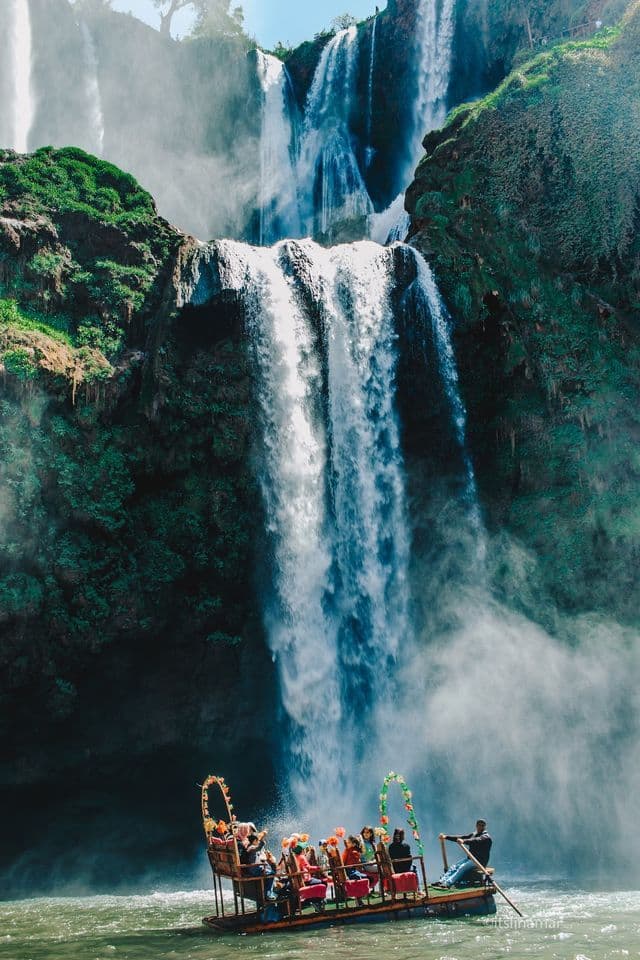
- Two full days is the sweet spot for a first visit. Day one covers the medina — Ben Youssef, the souks, Bahia Palace, Jemaa el-Fnaa at dusk. Day two is for Majorelle, the Yves Saint Laurent Museum, and a half-day in the Palmeraie or Ourika Valley.
- When is the best time to visit Marrakech?
- March through May and September through November. Summer temperatures regularly hit 40–45°C, and August is brutal — if you must travel then, head to Essaouira or Chefchaouen instead.
- Is Marrakech safe for first-time travellers?
- Yes. The medina is well-patrolled and busy until late. Standard city precautions apply — watch for pickpockets in crowded souks, avoid deserted alleys after 10pm, and say no firmly to unsolicited guides.
- Can you drink tap water in Marrakech?
- The tap water is chlorinated and considered safe for locals, but most visitors stick to bottled to avoid digestive upset. Many riads filter or supply their own.